
Clubs & Activities · Grades 5–8 · 2026–2027
Ask your child what they did today. Watch what they answer first.
It usually isn't the maths lesson. It's the club — the hour they chose for themselves, with the friends they chose, doing something nobody made them do.
Most schools call this "extracurricular." That word does a lot of quiet damage.
Clubs aren't the leftovers of the day.
Your child picks. Not us.
No assignment, no streaming, no "you'd be better suited to." A student who chooses their own hour shows up differently to one who was placed in it.
Grades 5 to 8, same room.
Clubs are the one place the whole school mixes. A Grade 8 teaching a Grade 5 to hold a ukulele is worth more than most leadership lessons.
Small enough to be noticed.
Every club is capped, run by a NAC teacher who already knows your child, and built so nobody spends the hour on the edge of the group.
This year's line-up
Six clubs. Six completely different ways to surprise yourself.
Read them the way your child will — looking for the one that makes them say oh, I'd do that.
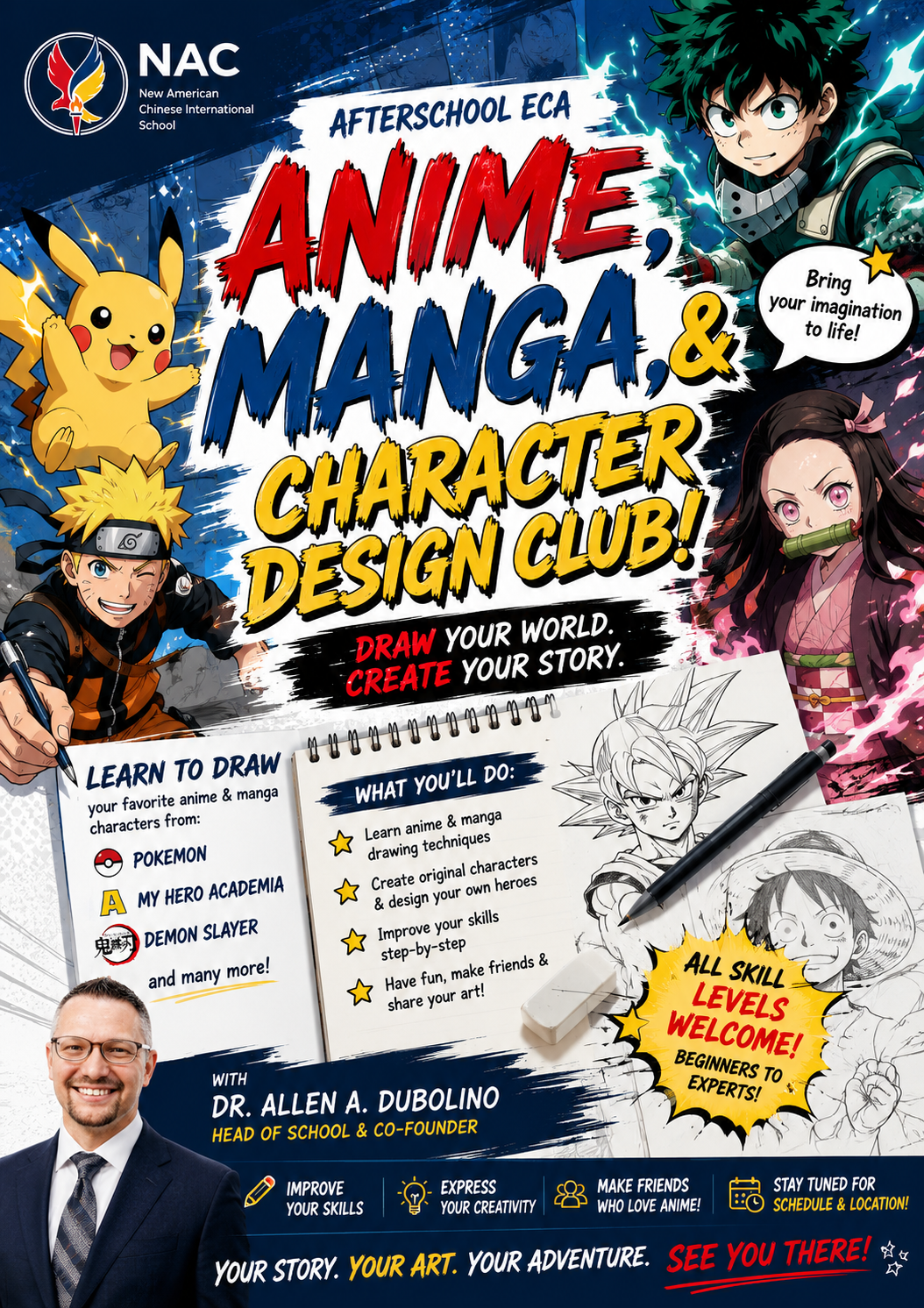
Anime, Manga & Character Design Club
Stop copying your favourite character. Start drawing your own.
This is a drawing club. Members learn the actual craft behind the anime and manga they already love — how the face is constructed, how proportion and expression work, how a single line of ink carries emotion — by studying characters from the series they choose themselves.
Then comes the part that changes them: designing an original character from nothing. A face, a silhouette, a personality, a name. Students arrive able to copy. They leave able to create.
- Anime and manga drawing fundamentals — face, proportion, expression
- Studying and rendering characters from favourite series
- Original character design, from concept to finished sheet
- Inking, shading, and building a personal portfolio of work
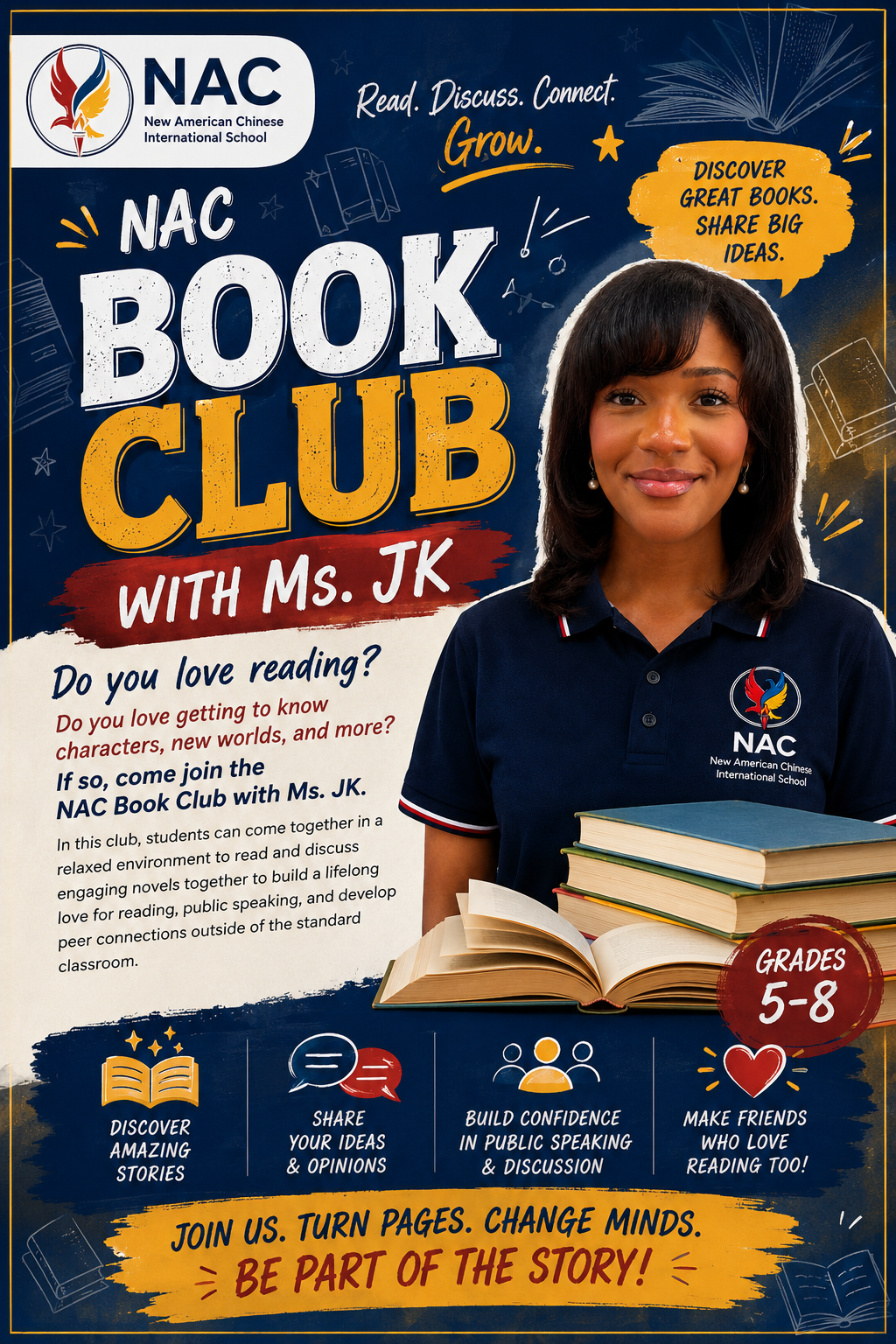
Book Club
A book, a circle of chairs, and an argument worth having.
Members read a shared English novel, chosen by the teacher so that everyone is genuinely stretched, then meet to talk about it properly. Not "what happened in chapter four" — but why the author made that choice, what the character was really afraid of, and whether the ending was earned.
There are no worksheets and no reading logs to sign. There are also no wrong opinions, only opinions you have to defend with something from the page. That habit — reading beneath the surface and saying what you found — carries into every subject a student will ever take.
- Shared English titles, selected by the teacher
- Discussion-led sessions — disagreement encouraged
- Reading for meaning: theme, motive, symbolism, and craft
- Building the habit of reading for pleasure, not for a grade
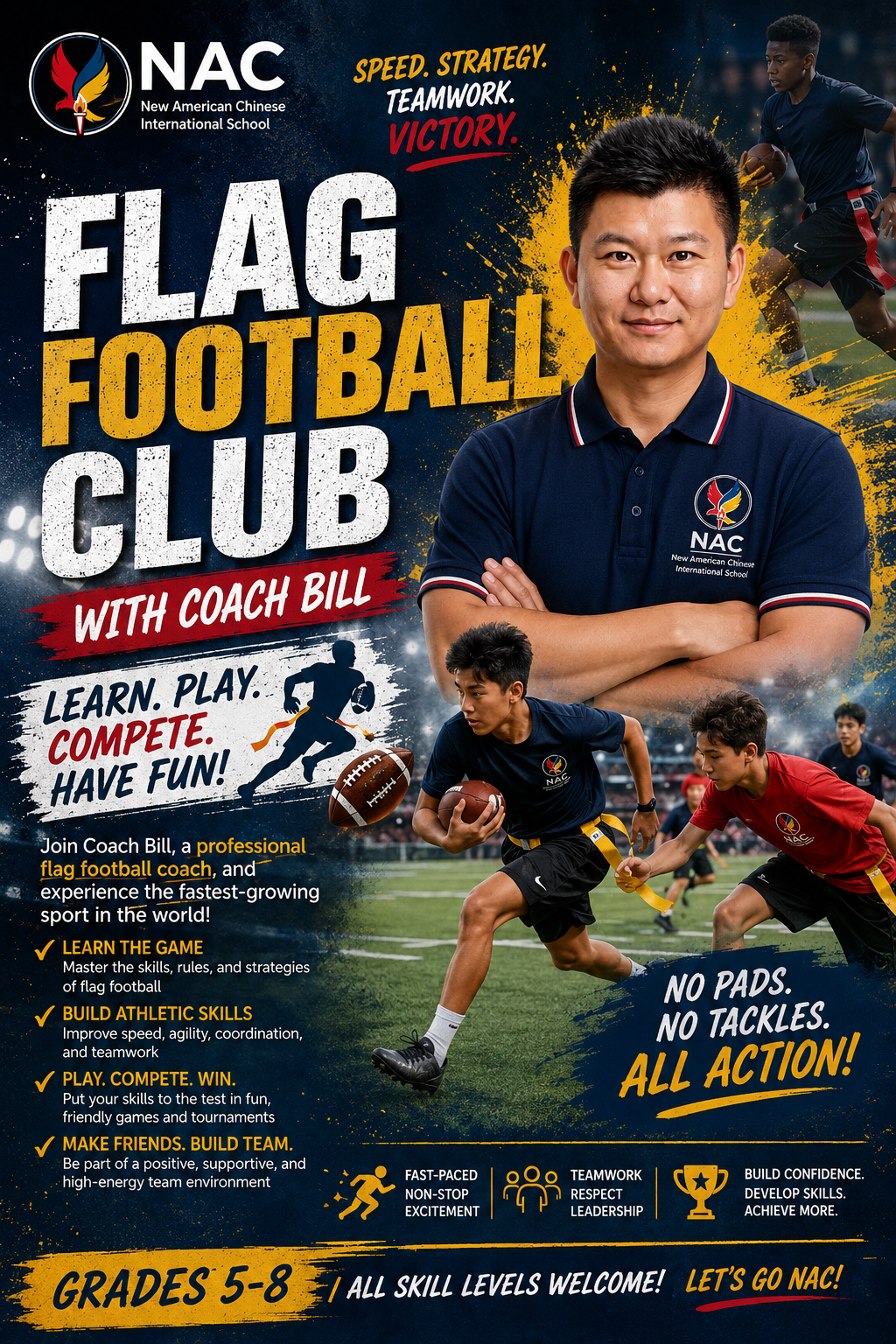
Flag Football Club
Full speed. No contact. No experience needed.
Nobody arrives knowing how to throw a spiral, which is exactly why this works — everyone starts at zero together. Students learn to throw, catch, run routes, and pull flags, then call their own plays in the huddle. Losing a down and resetting is the entire lesson.
Flag football is non-contact by design. It is fast, it is competitive, and it is safe.
- Throwing, catching, route running, and flag pulling
- Calling plays — students run their own huddle
- Full-sided games every session
- All equipment provided
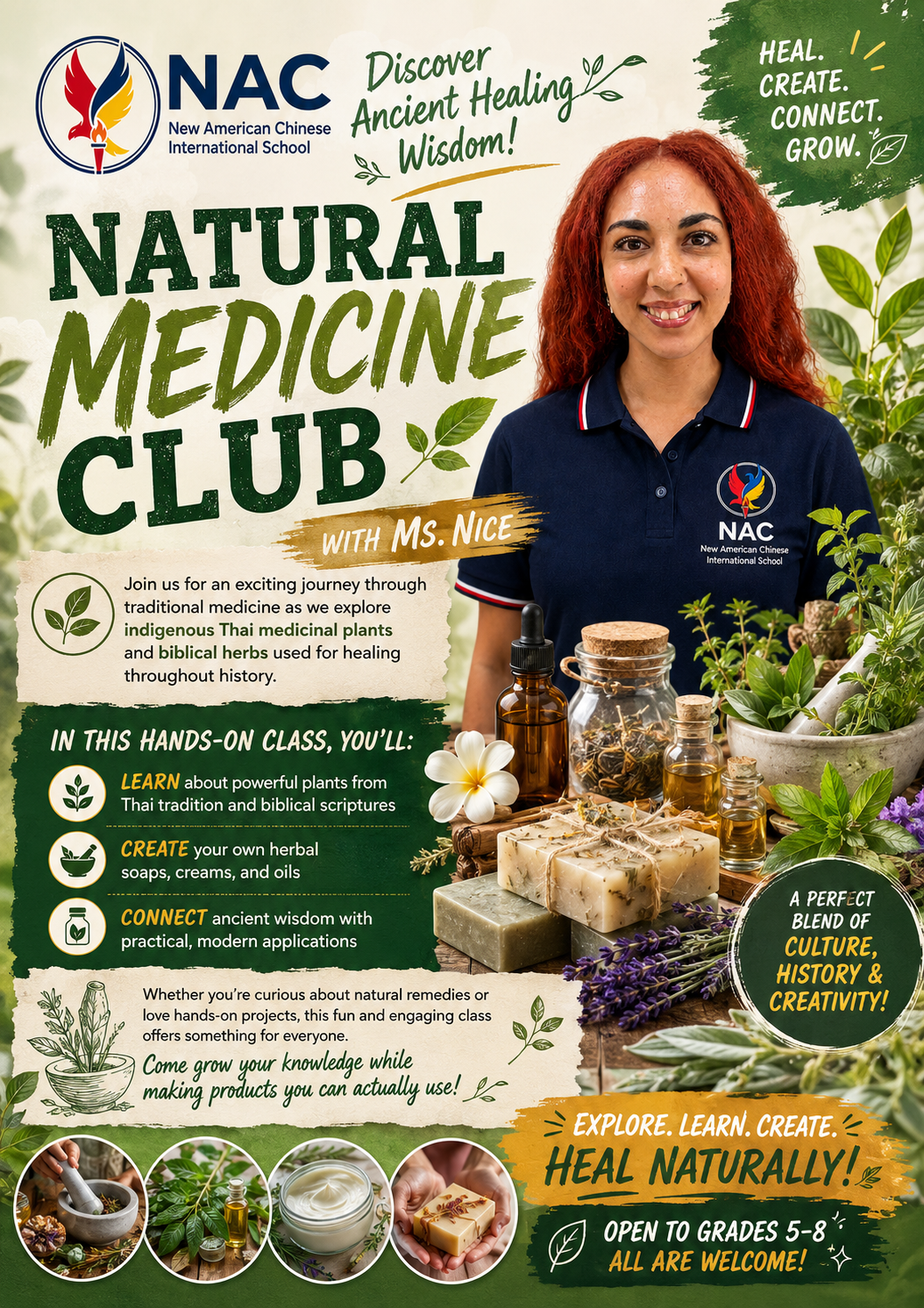
Natural Medicine Club
Thailand has been studying plants for eight centuries. So can a twelve-year-old.
Members grow, identify, and research the plants behind traditional Thai and Chinese practice — turmeric, ginger, lemongrass, holy basil — and then do the harder part: check what the modern evidence actually says. Some traditions hold up beautifully under testing. Some don't. Learning to tell the difference is the skill.
Along the way, the club builds and tends NAC's own herb garden.
- Growing, identifying, and cataloguing medicinal plants
- Thai and Chinese traditional practice, in context
- Reading evidence: what's proven, what's promising, what isn't
- Designing and maintaining the NAC herb garden
To be clear: this is a botany, culture, and scientific-literacy club. Students study remedies and evaluate claims. They do not prepare or take them, and nothing in the club is medical advice.

DTG Market Strategy Club
Dominate the Game. Real markets, real data, simulated money.
Members each run a simulated investment portfolio against live market data. They research companies, build a thesis, place their trades, and then live with the consequences — tracking their positions week by week while the market does whatever the market feels like doing.
The lessons land because they cost something. Why a great company can still be a bad buy. Why selling in a panic is the most expensive habit in finance. Why the student who ignored the hype usually finishes ahead. Most adults learn this with their own savings. These students learn it at twelve, and it pairs directly with our Financial Literacy course.
- How markets, shares, and indexes actually work
- Researching companies and building an investment case
- Simulated portfolios tracked against live market data
- Risk, diversification, compound growth, and the long game
To be clear: all trading is simulated. No student money is invested, no real accounts are opened, and nothing in the club is financial advice.
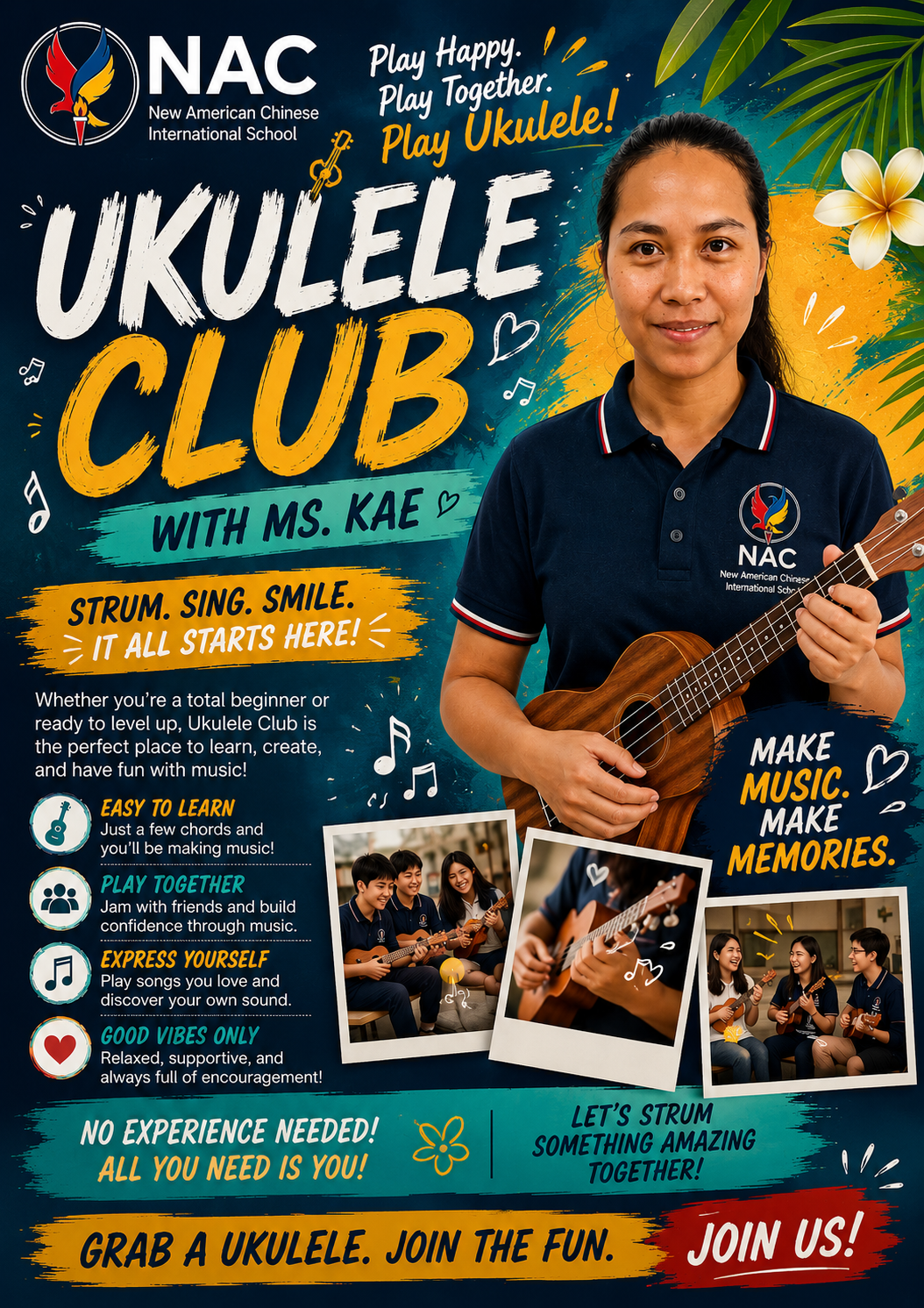
Ukulele Club
Four strings. Four chords. Three weeks to your first real song.
The ukulele is the kindest instrument ever invented for a beginner — small hands, soft strings, and a first song within reach almost immediately. That early win matters, because what follows is the genuinely hard part: practising something you're bad at, in front of other people, until you're not.
Members play together from week one and perform at the Spring Concert in May.
- Chords, strumming patterns, and reading chord charts
- Playing in an ensemble, not alone
- Songs in English
- Performing at the Spring Concert · instruments provided
Why every club carries a tag
At NAC, the club hour counts. Literally.
Every NAC student carries two records. A traditional academic transcript — and a VRS³ portfolio, which measures what they can actually do. Clubs feed the second one. What a student builds, leads, or sticks with after three o'clock becomes evidence in their portfolio, validated by a teacher, and carried into their university applications.
Value Creation
Did they make something that didn't exist before? An original character designed from nothing. A herb garden the whole school uses.
Resilience
Did they stay with the hard part? The chord that wouldn't come. The season that started 0–3. Persistence you can point to.
Sovereignty
Can they think for themselves and say so? An argument defended from the page. A position held while everyone else was panicking.
Come and see an ordinary Tuesday afternoon.
The best time to visit NAC isn't during a lesson. It's at three o'clock, when the bell goes and nobody leaves.
Schedule a Tour