
A Day in the Life at NAC: Inside the Phase 3 Learning Block
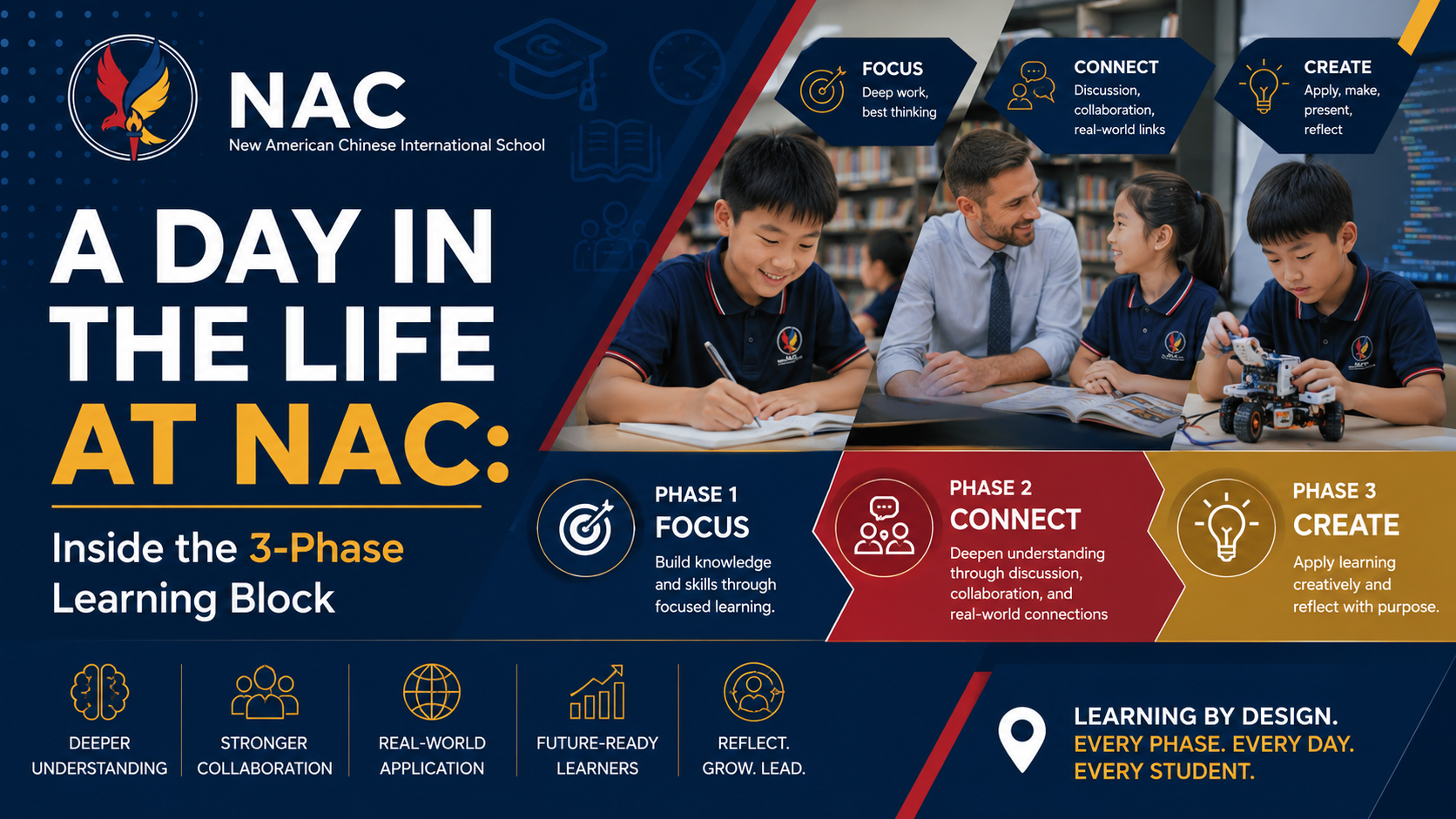
A Day in the Life at NAC: Inside the 3-Phase Learning Block
Every lesson at NAC runs on the same engine. Once you see the pattern, you'll never un-see it.
ทุกบทเรียนที่ NAC ใช้รูปแบบการเรียนรู้เดียวกัน เมื่อนักเรียนเข้าใจรูปแบบนี้แล้ว นักเรียนจะสามารถสังเกตและเรียนรู้รูปแบบการเรียนที่จะเกิดขึ้นในทุกบทเรียนได้อย่างชัดเจน
Every core lesson at NAC — English, Math, Science, Chinese, Thai — runs on the same 3-Phase Learning Block: Direct Instruction (15–20 min of teacher-led concept teaching), AI-Supported Personalised Practice (15–20 min on adaptive platforms calibrated to each student's exact level), and Application & Creation (10–20 min applying the concept to something real). This guide walks through what that actually looks like across a real school day, with real student projects.
ทุกวิชาหลักที่ NAC ได้แก่ ภาษาอังกฤษ คณิตศาสตร์ วิทยาศาสตร์ ภาษาจีน และภาษาไทย ใช้รูปแบบกระบวนการเรียนรู้ 3 ขั้นตอน ได้แก่
- การสอนโดยครู (15–20 นาที สำหรับการอธิบายและสอนแนวคิดสำคัญ)
- การฝึกฝนเฉพาะบุคคลโดยมีเทคโนโลยีอัจฉริยะช่วยสนับสนุน (15–20 นาที ผ่านระบบที่ปรับระดับการฝึกให้เหมาะกับความสามารถของนักเรียนแต่ละคนแบบทันที)
- การนำความรู้ไปประยุกต์ใช้และสร้างสรรค์ (10–20 นาที สำหรับนำแนวคิดที่เรียนไปใช้กับสถานการณ์จริง)
บทความนี้จะพาไปดูว่าแนวทางดังกล่าวเกิดขึ้นจริงอย่างไรตลอดหนึ่งวันเรียน พร้อมตัวอย่างโครงงานจริงของนักเรียน
Every Lesson, Same Engine
ทุกบทเรียนใช้รูปแบบการเรียนรู้เดียวกัน
Walk into any core academic lesson at NAC — on any day, in any grade — and you'll recognize the same three-phase rhythm. We use this structure consistently because a predictable pattern helps students focus on the content, not on figuring out what's expected of them next. Each phase does a job the other two cannot do.
เมื่อเข้าไปในห้องเรียนวิชาหลักของ NAC ไม่ว่าจะเป็นวันไหนหรือระดับชั้นใด นักเรียนจะพบกับรูปแบบการเรียนรู้ 3 ขั้นตอนที่ดำเนินไปในลำดับเดียวกัน NAC ใช้รูปแบบนี้อย่างต่อเนื่อง เพราะรูปแบบที่ชัดเจนและคาดเดาได้ช่วยให้นักเรียนจดจ่อกับเนื้อหาที่กำลังเรียน แทนที่จะต้องคอยคิดว่าต่อไปจะต้องทำอะไร แต่ละขั้นตอนมีหน้าที่เฉพาะที่อีกสองขั้นตอนไม่สามารถทดแทนกันได้
Direct Instruction
Teacher-led concept teaching: explicit instruction, Socratic discussion, modelled problem-solving. Technology does not replace this — it cannot.
ครูเป็นผู้นำการสอนแนวคิดสำคัญ ผ่านการอธิบายอย่างชัดเจน การอภิปรายโดยใช้คำถามเพื่อกระตุ้นการคิด และการสาธิตวิธีแก้ปัญหา เทคโนโลยีไม่สามารถทดแทนบทบาทนี้ได้
AI-Supported Practice
Every student moves to adaptive platforms calibrated to their exact level in real time — accelerating the advanced, remediating gaps quietly.
นักเรียนทุกคนฝึกฝนผ่านระบบที่สามารถปรับระดับให้เหมาะกับความสามารถของแต่ละคนได้แบบทันที ช่วยให้นักเรียนที่ก้าวหน้าไปได้เร็วขึ้น และช่วยเสริมในส่วนที่ยังมีช่องว่าง
Application & Creation
Students apply what they've mastered to something real — a decision, a product, an audience with actual stakes beyond a worksheet.
นักเรียนนำสิ่งที่เรียนรู้ไปประยุกต์ใช้กับสถานการณ์จริง ไม่ว่าจะเป็นการตัดสินใจ การสร้างผลงาน หรือการนำเสนอผลงานต่อผู้ชม ซึ่งแตกต่างจากการทำแบบฝึกหัดทั่วไป
Phase 2 is not an optional add-on — it's a promise NAC makes to every family at enrollment. It never gets skipped, shortened, or quietly turned into free time, no matter how tempting Phase 3 looks.
ช่วงที่ 2 ไม่ใช่กิจกรรมเสริมที่เลือกทำหรือไม่ทำก็ได้ แต่เป็นส่วนหนึ่งของการเรียนรู้ที่ NAC รับรองว่าจะเกิดขึ้นกับนักเรียนทุกคนตั้งแต่วันที่สมัครเข้าเรียน โดยจะไม่มีการละเว้นหรือลดเวลาสำหรับขั้นตอนนี้ หรือเปลี่ยนเวลาเรียนให้กลายเป็นเวลาว่าง ไม่ว่าช่วงที่ 3 จะน่าสนใจเพียงใด
Walking Through a Real NAC Day
หนึ่งวันแห่งการเรียนรู้ที่ NAC
Here's roughly how a day unfolds — the exact subjects rotate by grade, but the rhythm of the day itself doesn't change.
ต่อไปนี้คือตัวอย่างภาพรวมของการเรียนรู้ในแต่ละวัน แม้ว่าวิชาที่เรียนจะแตกต่างกันไปตามระดับชั้น แต่รูปแบบและลำดับการเรียนรู้ตลอดทั้งวันยังคงเหมือนเดิม
Advisory & Independent Reading
The day starts quietly, not with a bell rushing anyone into content.
ช่วงพูดคุยกับครูประจำชั้นและการอ่านหนังสือด้วยตนเอง วันเรียนเริ่มต้นอย่างไม่เร่งรีบ โดยให้นักเรียนมีเวลาเตรียมตัวก่อนเข้าสู่บทเรียน
Period 1–3: Core Academics
Math, English, Science each run their own full 3-Phase Learning Block.
คณิตศาสตร์ ภาษาอังกฤษ และวิทยาศาสตร์ ต่างดำเนินการเรียนรู้ครบทั้ง 3 กระบวนการเรียนรู้
Wellness Break
A genuine 15-minute break — not a transition, a reset.
พัก 15 นาที เพื่อผ่อนคลาย
Chinese Language
Daily Mandarin, differentiated by pathway, running its own Phase 1–3 rhythm.
เรียนภาษาจีนกลางทุกวัน โดยปรับรูปแบบให้เหมาะกับนักเรียนแต่ละระดับหรือแนวทางการเรียน
Challenge Studio / AI Lab & Robotics
Signature courses that make Education 2.0 tangible, not theoretical.
รายวิชาเด่นที่เปลี่ยนแนวคิดการศึกษาให้เป็นการเรียนรู้และการลงมือทำจริง
Lunch (No Screens)
A real break from devices, every single day.
พักรับประทานอาหารกลางวัน (งดใช้โทรศัพท์มือถือและแท็บเล็ต)
Thai Language / Financial Literacy / Ethical Leadership
Rotating signature and language periods, depending on the day.
สลับเรียนรายวิชาเด่นและวิชาภาษาตามวันที่กำหนด
Art, Music, PE, or NAC Media
Every Friday closes with Challenge Studio Exhibition & Share across all classes.
ทุกวันศุกร์ปิดท้ายด้วยการนำเสนอและแบ่งปันผลงานจากทุกชั้นเรียน
Reflection & Portfolio
Students close the academic day by reflecting on what they actually did with it.
นักเรียนปิดท้ายวันเรียนด้วยการทบทวนว่า วันนี้ตนเองได้เรียนรู้และลงมือทำอะไรจริงบ้าง
House Dismissal
Every child ends the day seen, valued, and connected to their House community.
นักเรียนทุกคนจบวันด้วยความรู้สึกว่าตนเองได้รับการดูแล มีคุณค่า และเป็นส่วนหนึ่งของชุมชนกลุ่มประจำบ้าน
Phase 3 in Action: Four Real Projects From Our Classrooms
ช่วงที่ 3 ในทางปฏิบัติ: ตัวอย่างโครงงานจริง 4 โครงงานจากห้องเรียน
Phase 3 only works when it's genuinely open-ended — when there's a real audience, a real decision, and more than one reasonable way to get there. Here's what that actually looks like across four different classrooms.
ช่วงที่ 3 จะเกิดขึ้นอย่างแท้จริงเมื่อกิจกรรมเปิดกว้างและไม่มีคำตอบหรือวิธีการเพียงแบบเดียว โดยมีผู้รับผลงานจริง มีการตัดสินใจจริง และเปิดโอกาสให้ใช้วิธีการที่สมเหตุสมผลได้มากกว่าหนึ่งวิธี ต่อไปนี้คือตัวอย่างจากห้องเรียน 4 ห้องที่แตกต่างกัน
The Field Trip Cost Estimate Challenge
Students plan a real field trip for all of NAC with an 80,000 baht budget and 40 students to account for — researching real prices, building a time schedule, and calculating exactly how much each student must pay. There's no single right answer, only a defensible plan.
นักเรียนร่วมกันวางแผนทัศนศึกษาจริงสำหรับนักเรียน NAC โดยมีงบประมาณ 80,000 บาท และต้องวางแผนสำหรับนักเรียน 40 คน นักเรียนต้องค้นหาราคาจริง จัดทำตารางเวลา และคำนวณอย่างละเอียดว่านักเรียนแต่ละคนต้องจ่ายเท่าไร กิจกรรมนี้ไม่มีคำตอบที่ถูกต้องเพียงคำตอบเดียว แต่ต้องเป็นแผนที่สามารถอธิบายและให้เหตุผลสนับสนุนได้

The Sports Day Refreshment Shop
With a 15,000 baht budget and a goal of serving 50 people at a profit, students build a full profit-and-loss projection: purchase plans, pricing, break-even analysis, and a risk/loss-prevention plan — then present and defend it to the class.
ด้วยงบประมาณ 15,000 บาท และเป้าหมายในการให้บริการผู้เข้าร่วมงาน 50 คนพร้อมสร้างกำไร นักเรียนจัดทำแผนคาดการณ์กำไรและขาดทุนอย่างครบถ้วน ตั้งแต่แผนการจัดซื้อ การกำหนดราคา การวิเคราะห์จุดคุ้มทุน ไปจนถึงแผนป้องกันความเสี่ยงและการขาดทุน จากนั้นนำเสนอและอธิบายเหตุผลสนับสนุนแผนของตนต่อชั้นเรียน

Who's Telling the Story? Narrative Point of View
After learning to identify first person, third person limited, and third person omniscient narration, student teams rewrite a story from a different point of view and explain exactly how the change reshapes what a reader understands and feels.
หลังจากเรียนรู้การจำแนกการเล่าเรื่องในมุมมองบุรุษที่หนึ่ง บุรุษที่สามแบบจำกัด และบุรุษที่สามแบบรอบรู้ นักเรียนทำงานเป็นทีมเพื่อเขียนเรื่องเดิมขึ้นใหม่จากมุมมองที่แตกต่าง แล้วอธิบายอย่างชัดเจนว่าการเปลี่ยนมุมมองส่งผลต่อสิ่งที่ผู้อ่านเข้าใจและความรู้สึกของผู้อ่านอย่างไร

Potential vs. Kinetic Energy in Action
Teams of student "engineers" design, build, and test a mini roller coaster using pool noodles, cardboard, and marbles — required to start at least 50cm above ground, then improve their design after testing and explain exactly how potential energy converted into kinetic energy.
นักเรียนทำงานเป็นทีมในบทบาท "วิศวกร" ออกแบบ สร้าง และทดสอบรถไฟเหาะจำลองโดยใช้ท่อโฟม กระดาษแข็ง และลูกแก้ว โดยรถไฟเหาะต้องเริ่มต้นจากความสูงอย่างน้อย 50 เซนติเมตรจากพื้น จากนั้นนักเรียนปรับปรุงแบบจำลองหลังการทดสอบ และอธิบายอย่างชัดเจนว่าพลังงานศักย์เปลี่ยนเป็นพลังงานจลน์ได้อย่างไร

"A word problem about apples is not automatically authentic. Phase 3 only counts when there's a real audience, a real decision, and more than one reasonable way to get there."
"การให้เด็กทำโจทย์เกี่ยวกับแอปเปิลไม่ได้หมายความว่าเด็กกำลังเรียนรู้จากสถานการณ์จริงเสมอไป การเรียนรู้ในช่วงที่ 3 จะถือว่าเป็นการเรียนรู้จากสถานการณ์จริง ก็ต่อเมื่อมีผู้รับผลงานจริง มีการตัดสินใจจริง และเปิดโอกาสให้ใช้วิธีการที่สมเหตุสมผลได้มากกว่าหนึ่งวิธี"
Frequently Asked Questions
คำถามที่พบบ่อย
What is the 3-Phase Learning Block?
It's the structure every core lesson at NAC follows: Phase 1 (Direct Instruction, 15–20 min), Phase 2 (AI-Supported Personalised Practice, 15–20 min), and Phase 3 (Application & Creation, 10–20 min).
คำถาม: 3 กระบวนการเรียนรู้คืออะไร?
คำตอบ: เป็นรูปแบบที่ใช้กับทุกวิชาหลักของ NAC ประกอบด้วย ช่วงที่ 1 การสอนโดยครู (15–20 นาที) ช่วงที่ 2 การฝึกฝนเฉพาะบุคคลโดยมีเทคโนโลยีอัจฉริยะช่วยสนับสนุน (15–20 นาที) และช่วงที่ 3 การนำความรู้ไปประยุกต์ใช้และสร้างสรรค์ (10–20 นาที)
Can Phase 2 ever be skipped if a lesson runs out of time?
No. Phase 2 is a non-negotiable promise NAC makes to every family — every student practices daily on adaptive platforms calibrated to their exact level, regardless of time pressure elsewhere in the lesson.
คำถาม: หากเวลาเรียนไม่เพียงพอ สามารถข้ามช่วงที่ 2 ได้หรือไม่?
คำตอบ: ไม่ได้ ช่วงที่ 2 เป็นส่วนสำคัญของการเรียนรู้ที่ NAC รับรองว่าจะจัดให้กับนักเรียนทุกคน และไม่สามารถละเว้นได้ นักเรียนทุกคนจะได้ฝึกฝนทุกวันผ่านระบบที่ปรับระดับให้เหมาะกับความสามารถของแต่ละคน โดยไม่ว่าบทเรียนส่วนอื่นจะมีข้อจำกัดด้านเวลาเพียงใด
What makes a Phase 3 task different from a normal worksheet?
A genuine Phase 3 task has a real audience, produces an actual decision or product (not just a checked answer), is genuinely open to more than one approach, and requires students to explain or defend their reasoning.
คำถาม: อะไรทำให้กิจกรรมในช่วงที่ 3 แตกต่างจากแบบฝึกหัดทั่วไป?
คำตอบ: กิจกรรมในช่วงที่ 3 อย่างแท้จริงต้องมีผู้รับผลงานจริง นำไปสู่การตัดสินใจหรือผลงานจริง ไม่ใช่เพียงคำตอบที่ตรวจว่าถูกหรือผิด เปิดโอกาสให้ใช้วิธีการได้มากกว่าหนึ่งแนวทาง และให้นักเรียนอธิบายหรือให้เหตุผลสนับสนุนแนวคิดของตนเอง
Does every subject follow this structure, or just Math and Science?
Every core academic subject follows the same 3-Phase rhythm — English, Math, Science, Chinese, and Thai all run their own version of Phase 1 through Phase 3 daily.
คำถาม: ทุกวิชาใช้รูปแบบนี้หรือเฉพาะคณิตศาสตร์และวิทยาศาสตร์?
คำตอบ: ทุกวิชาหลักใช้รูปแบบ 3 กระบวนการเรียนรู้เหมือนกัน ได้แก่ ภาษาอังกฤษ คณิตศาสตร์ วิทยาศาสตร์ ภาษาจีน และภาษาไทย โดยแต่ละวิชาดำเนินการเรียนรู้ตั้งแต่ช่วงที่ 1 ถึงช่วงที่ 3 เป็นประจำทุกวัน
See a 3-Phase Lesson in Session
Schedule a campus visit and watch Phase 1, 2, and 3 unfold in a real NAC classroom.
Visit nac-school.com