
Banning AI Won’t Protect Students. Designing It Better Will.
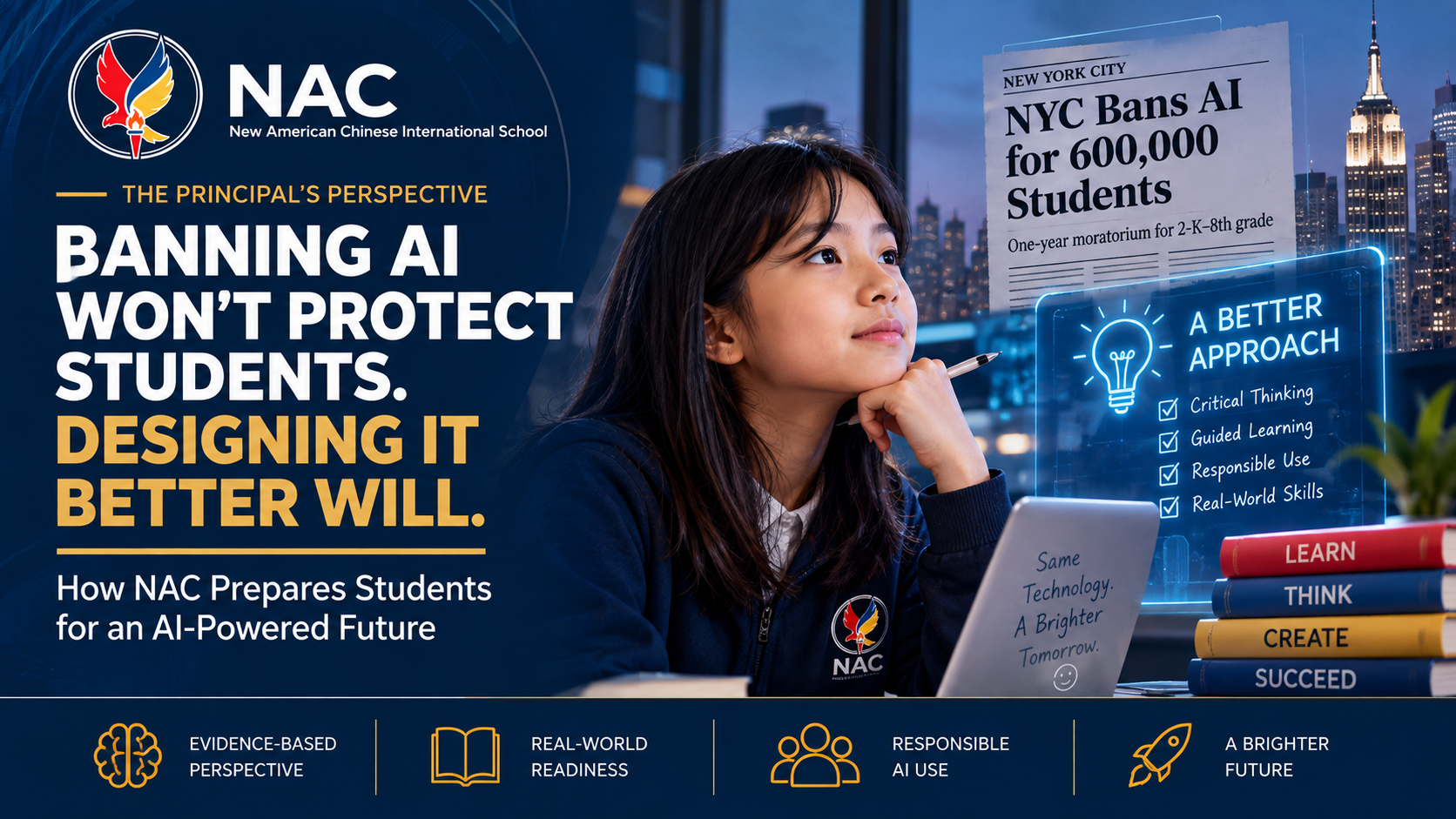
Banning AI Won't Protect Students. Designing It Better Will.
New York City just banned AI for 600,000 children. The research says the problem they're worried about is real — and that a ban is the wrong fix.
นครนิวยอร์กเพิ่งประกาศห้ามใช้ AI กับนักเรียน 600,000 คน งานวิจัยยืนยันว่าปัญหาที่ผู้กำหนดนโยบายกังวลนั้นมีอยู่จริง แต่การแบนไม่ใช่วิธีแก้ไขที่ถูกต้อง
On 2 September 2026, New York City announced a one-year moratorium on student-facing generative AI for roughly 600,000 students from 2-K through 8th grade — the most expansive such ban in the United States. The concern behind it is legitimate and evidence-backed: unguarded AI genuinely does damage learning. But the largest study on this question found something the ban overlooks. The same AI, redesigned with pedagogical guardrails, produced a 127% improvement in student performance and largely eliminated the harm. The problem was never AI. It was AI that gives answers. That distinction is the entire basis of how NAC built Foundation AI.
เมื่อวันที่ 2 กันยายน 2569 นครนิวยอร์กประกาศระงับการใช้ generative AI สำหรับนักเรียนราว 600,000 คน ตั้งแต่ระดับอนุบาลถึงมัธยมศึกษาปีที่ 2 เป็นเวลาหนึ่งปี ซึ่งถือเป็นการแบนที่ครอบคลุมที่สุดในสหรัฐอเมริกา ความกังวลเบื้องหลังนโยบายนี้มีเหตุผลและมีงานวิจัยรองรับ เพราะ AI ที่ไม่มีการควบคุมส่งผลเสียต่อการเรียนรู้จริง แต่งานวิจัยชิ้นใหญ่ที่สุดในประเด็นนี้พบสิ่งที่การแบนมองข้ามไป นั่นคือ AI ตัวเดียวกันที่ออกแบบใหม่พร้อมกลไกป้องกันเชิงการสอน สร้างผลลัพธ์การเรียนรู้ที่ดีขึ้นถึง 127% และลบล้างผลเสียได้เกือบทั้งหมด ปัญหาจึงไม่เคยอยู่ที่ AI แต่อยู่ที่ AI ที่ให้คำตอบสำเร็จรูป ความแตกต่างนี้คือรากฐานทั้งหมดของการสร้าง Foundation AI ที่ NAC

The Wharton PNAS study, at a glance.
งานวิจัยของ Wharton ที่ตีพิมพ์ใน PNAS โดยสรุป
What New York City Actually Did
สิ่งที่นครนิวยอร์กทำจริง ๆ
Mayor Zohran Mamdani and Schools Chancellor Kamar Samuels announced a one-year moratorium on student-facing generative AI covering 2-K through 8th grade — nearly two-thirds of the district's total enrollment. More than 38 previously approved programs will have their AI components disabled. High school students keep limited access plus twice-yearly "AI critical thinking" modules, and companion chatbots are prohibited at every grade level.
นายกเทศมนตรี Zohran Mamdani และผู้อำนวยการเขตการศึกษา Kamar Samuels ประกาศระงับการใช้ generative AI ที่นักเรียนเข้าถึงได้เป็นเวลาหนึ่งปี ครอบคลุมตั้งแต่ระดับ 2-K ถึงเกรด 8 หรือเกือบสองในสามของนักเรียนทั้งหมดในเขตการศึกษา โปรแกรมที่เคยได้รับอนุญาตมากกว่า 38 รายการจะถูกปิดการใช้งานในส่วนที่เกี่ยวข้องกับ AI ส่วนนักเรียนระดับมัธยมศึกษาตอนปลายยังคงเข้าถึงได้อย่างจำกัด พร้อมเรียนโมดูลการคิดวิเคราะห์เกี่ยวกับ AI ปีละสองครั้ง และห้ามใช้แชทบอทในลักษณะเพื่อนคู่คิดในทุกระดับชั้น
I want to be fair to the reasoning. The stated goal is protecting students' critical thinking and the student-teacher relationship, and that is a serious, defensible concern held by serious people. New York is not being foolish. It is being cautious about the right problem in the wrong way — and it has done this before, banning ChatGPT in 2023 only to reverse the decision months later.
ผมต้องการให้ความเป็นธรรมกับเหตุผลเบื้องหลังนโยบายนี้ เป้าหมายที่ประกาศไว้คือการปกป้องทักษะการคิดวิเคราะห์ของนักเรียนและความสัมพันธ์ระหว่างครูกับนักเรียน ซึ่งเป็นความกังวลที่จริงจังและมีเหตุผล นครนิวยอร์กไม่ได้ตัดสินใจอย่างไร้สติ แต่กำลังระมัดระวังต่อปัญหาที่ถูกต้อง เพียงเลือกใช้วิธีการที่ไม่ถูกต้อง และเมืองนี้ก็เคยทำเช่นเดียวกันมาแล้ว โดยเคยแบน ChatGPT ในปี 2566 ก่อนยกเลิกการตัดสินใจดังกล่าวในอีกไม่กี่เดือนต่อมา
First, the Uncomfortable Part: The Concern Is Real
ประเด็นแรกที่ต้องยอมรับ: ความกังวลนั้นมีมูล
Any honest argument has to start by conceding the strongest point against it. Cognitive offloading — the tendency to let a tool do your thinking until you lose the ability to do it yourself — is not a hypothetical worry invented by technophobes. It is measurable.
ข้อโต้แย้งที่ซื่อสัตย์ต้องเริ่มต้นด้วยการยอมรับประเด็นที่แข็งแกร่งที่สุดของฝ่ายตรงข้าม การถ่ายโอนภาระทางความคิด (cognitive offloading) หรือแนวโน้มที่จะปล่อยให้เครื่องมือคิดแทน จนท้ายที่สุดเราสูญเสียความสามารถในการคิดด้วยตนเอง ไม่ใช่ความกังวลในจินตนาการที่ผู้กลัวเทคโนโลยีสร้างขึ้น แต่เป็นปรากฏการณ์ที่สามารถวัดผลได้
In 2025, MIT Media Lab researchers ran EEG scans on 54 participants writing essays under three conditions: with ChatGPT, with a search engine, and with no tools at all. Brain connectivity scaled down in direct proportion to how much external help was available. The ChatGPT group showed the weakest neural coupling, struggled to recall what they had just written, and produced noticeably more generic prose. The researchers named the effect "cognitive debt."
ในปี 2568 นักวิจัยจาก MIT Media Lab ได้ตรวจวัดคลื่นไฟฟ้าสมอง (EEG) ของผู้เข้าร่วม 54 คนขณะเขียนเรียงความภายใต้เงื่อนไขสามรูปแบบ ได้แก่ ใช้ ChatGPT ใช้เครื่องมือค้นหา และไม่ใช้เครื่องมือใด ๆ ผลพบว่าการเชื่อมโยงระหว่างบริเวณต่าง ๆ ของสมองลดลงตามสัดส่วนโดยตรงกับปริมาณความช่วยเหลือจากภายนอก กลุ่มที่ใช้ ChatGPT มีการเชื่อมโยงของระบบประสาทอ่อนที่สุด จำสิ่งที่เพิ่งเขียนได้ยากกว่า และสร้างงานเขียนที่มีลักษณะทั่วไปและขาดความเฉพาะตัวอย่างเห็นได้ชัด นักวิจัยเรียกปรากฏการณ์นี้ว่า "หนี้ทางความคิด" (cognitive debt)
So if you are a parent who has felt uneasy watching a child get an instant answer without appearing to think about it, your instinct is supported by evidence. NAC does not dismiss that. We built our entire AI architecture around it.
ดังนั้น หากคุณเป็นผู้ปกครองที่รู้สึกไม่สบายใจเมื่อเห็นลูกได้รับคำตอบทันทีโดยดูเหมือนไม่ได้ผ่านกระบวนการคิด สัญชาตญาณของคุณมีหลักฐานงานวิจัยรองรับ NAC ไม่ได้มองข้ามประเด็นนี้ ตรงกันข้าม เราออกแบบสถาปัตยกรรม AI ทั้งหมดของเราขึ้นมาโดยคำนึงถึงความกังวลนี้เป็นสำคัญ
The Study That Should Have Changed the Policy
งานวิจัยที่ควรจะเปลี่ยนนโยบายนี้
Here is where the case for a ban falls apart. In 2025, researchers from the University of Pennsylvania's Wharton School published a randomized controlled trial in PNAS involving nearly a thousand high school mathematics students. They didn't test "AI vs. no AI." They tested three conditions — and the third one is the one that matters.
นี่คือจุดที่ข้อโต้แย้งสนับสนุนการแบนเริ่มพังทลายลง ในปี 2568 นักวิจัยจาก Wharton School แห่งมหาวิทยาลัยเพนซิลเวเนียได้ตีพิมพ์การทดลองแบบสุ่มมีกลุ่มควบคุมในวารสาร PNAS โดยศึกษานักเรียนคณิตศาสตร์ระดับมัธยมศึกษาตอนปลายเกือบหนึ่งพันคน พวกเขาไม่ได้ทดสอบเพียง "ใช้ AI กับไม่ใช้ AI" แต่ทดสอบสามเงื่อนไข และเงื่อนไขที่สามคือสิ่งที่สำคัญที่สุด
Bastani et al., PNAS (2025) — "Generative AI without guardrails can harm learning"
ข้อค้นพบ: แชทบอททั่วไปทำผลงานได้ดีขึ้นขณะมีเครื่องมือช่วย แต่ผลการทำงานลดลง 17% เมื่อไม่มีเครื่องมือ ส่วน GPT Tutor ซึ่งเป็น AI ที่ไม่ให้คำตอบสำเร็จรูป ช่วยเพิ่มผลลัพธ์การเรียนรู้ 127% และลบล้างผลเสียในภายหลังได้เกือบทั้งหมด
Read those two columns again. The harm New York City is legislating against is real — it shows up as a 17% collapse in unassisted performance. But it was produced by one specific design choice: an AI that hands over answers. Change that single variable, and the same technology becomes the most effective intervention in the study.
ลองอ่านข้อมูลทั้งสองส่วนนี้อีกครั้ง ผลเสียที่นครนิวยอร์กกำลังออกกฎหมายเพื่อป้องกันนั้นมีอยู่จริง โดยปรากฏเป็นผลการทำงานที่ลดลง 17% เมื่อไม่มีเครื่องมือช่วย แต่ผลเสียดังกล่าวเกิดจากการตัดสินใจด้านการออกแบบเพียงจุดเดียว นั่นคือการให้ AI ยื่นคำตอบสำเร็จรูปให้ เมื่อเปลี่ยนตัวแปรเพียงจุดนี้ เทคโนโลยีเดียวกันกลับกลายเป็นแนวทางที่ให้ผลดีที่สุดในการศึกษาทั้งหมด
This Is Exactly Why Foundation AI Never Gives Answers
นี่คือเหตุผลที่ Foundation AI ไม่เคยให้คำตอบ
NAC's Foundation AI — the Socratic learning intelligence behind our personas Petros and Logikos — is built on a single non-negotiable rule: it does not give answers. It asks questions. It surfaces the next useful step. It notices where a student's reasoning went sideways and points them back toward it. When a student asks it to just solve the problem, it declines and asks them what they've tried.
Foundation AI ของ NAC ซึ่งเป็นระบบปัญญาการเรียนรู้แบบโสเครติสที่อยู่เบื้องหลังตัวตน Petros และ Logikos สร้างขึ้นบนกฎสำคัญเพียงข้อเดียวที่ไม่มีข้อยกเว้น คือไม่ให้คำตอบสำเร็จรูป ระบบจะตั้งคำถาม ชี้ให้เห็นขั้นตอนถัดไปที่เป็นประโยชน์ สังเกตว่ากระบวนการให้เหตุผลของนักเรียนคลาดเคลื่อนไปตรงไหน และชี้นำให้นักเรียนกลับมาสู่แนวทางที่ถูกต้อง เมื่อนักเรียนขอให้ระบบแก้โจทย์ให้ ระบบจะปฏิเสธและถามกลับว่านักเรียนได้ลองทำอะไรไปแล้วบ้าง
That is not a marketing position. It is the GPT Tutor condition from the Wharton study, implemented as school infrastructure. And it addresses the MIT finding too: that study also found students who did the hard cognitive work first and brought AI in afterward showed stronger recall and more widespread brain activity than students who started with the model. Effort first, amplification second. That ordering is the whole game — and it's precisely why Phase 1 of NAC's 3-Phase Learning Block is a teacher, not a machine.
นี่ไม่ใช่คำโฆษณา แต่คือการนำเงื่อนไข GPT Tutor จากงานวิจัยของ Wharton มาปฏิบัติจริงในฐานะโครงสร้างพื้นฐานของโรงเรียน และยังสอดคล้องกับข้อค้นพบของ MIT ด้วย เพราะงานวิจัยดังกล่าวพบว่านักเรียนที่ลงมือใช้ความคิดอย่างหนักด้วยตนเองก่อน แล้วจึงนำ AI เข้ามาช่วยภายหลัง มีความสามารถในการจดจำที่ดีกว่าและมีกิจกรรมการทำงานของสมองกว้างขวางกว่านักเรียนที่เริ่มต้นด้วย AI ทันที คิดด้วยตนเองก่อน แล้วจึงใช้ AI เพื่อขยายศักยภาพ ลำดับขั้นตอนนี้คือหัวใจสำคัญทั้งหมด และเป็นเหตุผลที่ระยะที่ 1 ของบล็อกการเรียนรู้ 3 ระยะของ NAC ต้องเริ่มต้นด้วยครู ไม่ใช่เครื่องจักร
Two Responses to the Same Evidence
สองแนวทางตอบสนองต่อหลักฐานชุดเดียวกัน
That last row deserves more attention than it usually gets. A school ban does not remove AI from a child's life — it removes the supervised, well-designed version and leaves the unguarded consumer version, which is the exact one the research shows causes harm.
ประเด็นในแถวสุดท้ายนั้นสมควรได้รับความสนใจมากกว่าที่เป็นอยู่ การแบนในโรงเรียนไม่ได้ทำให้ AI หายไปจากชีวิตของเด็ก แต่เป็นการนำ AI เวอร์ชันที่มีการดูแลและออกแบบมาอย่างเหมาะสมออกไป เหลือไว้เพียงเวอร์ชันเชิงพาณิชย์ที่ไม่มีการควบคุม ซึ่งเป็นเวอร์ชันที่งานวิจัยชี้ให้เห็นว่าก่อให้เกิดผลเสีย
What a Twelve-Month Pause Actually Costs
ต้นทุนที่แท้จริงของการหยุดสิบสองเดือน
PwC's 2026 Global AI Jobs Barometer analysed more than one billion job advertisements across 27 countries. The findings describe the market our current Grade 5 students will graduate into.
รายงาน Global AI Jobs Barometer ปี 2569 ของ PwC วิเคราะห์ประกาศรับสมัครงานมากกว่าหนึ่งพันล้านรายการใน 27 ประเทศ ข้อค้นพบเหล่านี้สะท้อนให้เห็นถึงตลาดแรงงานที่นักเรียนเกรด 5 ของเราในวันนี้จะก้าวเข้าสู่เมื่อสำเร็จการศึกษา
ค่าจ้างที่สูงกว่าโดยเฉลี่ยสำหรับตำแหน่งที่ต้องใช้ทักษะ AI
อัตราการเติบโตของตำแหน่งงานที่ต้องใช้ทักษะ AI เทียบกับตลาดงานโดยรวม
โอกาสที่ตำแหน่งงานระดับเริ่มต้นจะต้องการทักษะระดับอาวุโส เช่น วิจารณญาณ
Notice what that third figure is really saying. The jobs that survive AI exposure are the ones demanding judgement, leadership, and strategic thinking — the human capacities. This is the strongest argument for teaching AI properly, not against it: the market is not rewarding people who can operate a chatbot. It is rewarding people who can direct one and evaluate what comes back. You cannot develop that judgement about a tool you have never been permitted to touch.
ลองพิจารณาว่าตัวเลขที่สามกำลังบอกอะไรอย่างแท้จริง งานที่ยังคงอยู่ท่ามกลางการเข้ามาของ AI คืองานที่ต้องใช้วิจารณญาณ ภาวะผู้นำ และการคิดเชิงกลยุทธ์ ซึ่งล้วนเป็นศักยภาพของมนุษย์ นี่คือเหตุผลที่หนักแน่นที่สุดว่าทำไมเราจึงควรสอนให้นักเรียนใช้ AI อย่างถูกวิธี แทนที่จะห้ามใช้ ตลาดแรงงานไม่ได้ให้รางวัลแก่ผู้ที่เพียงรู้วิธีใช้แชทบอท แต่ให้รางวัลแก่ผู้ที่สามารถกำหนดทิศทางการใช้งานและประเมินผลลัพธ์ที่ได้รับกลับมา และเราไม่สามารถพัฒนาวิจารณญาณที่เกี่ยวข้องกับเครื่องมือใด ๆ ได้ หากไม่เคยได้รับอนุญาตให้ทดลองใช้เครื่องมือนั้น
A Note on What "AI" Actually Means
ข้อสังเกตเกี่ยวกับความหมายที่แท้จริงของคำว่า "AI"
Much of the fear around AI comes from a category error: treating "AI" as a synonym for "chatbot." Machine learning has been quietly running underneath ordinary life for years, and almost nobody objects to it.
ความกลัวส่วนใหญ่เกี่ยวกับ AI เกิดจากความเข้าใจผิดในการจัดหมวดหมู่ นั่นคือการมองว่า "AI" มีความหมายเดียวกับ "แชทบอท" ทั้งที่แมชชีนเลิร์นนิงทำงานอยู่เบื้องหลังชีวิตประจำวันของเรามาหลายปีแล้ว และแทบไม่มีใครคัดค้านการทำงานของมัน
A student who grows up without any structured understanding of how these systems work isn't protected from them. They are simply a less informed participant in a world already built on them — less able to notice when a model is biased, wrong, or being used on them.
นักเรียนที่เติบโตขึ้นโดยไม่มีความเข้าใจอย่างเป็นระบบว่าระบบเหล่านี้ทำงานอย่างไร ไม่ได้หมายความว่าพวกเขาจะได้รับการปกป้องจาก AI แต่หมายความว่าพวกเขาจะกลายเป็นผู้มีส่วนร่วมที่มีความรู้ความเข้าใจน้อยกว่าในโลกที่สร้างขึ้นบนระบบเหล่านี้อยู่แล้ว และมีความสามารถน้อยลงในการสังเกตว่าเมื่อใดโมเดลมีอคติ ให้ข้อมูลผิดพลาด หรือกำลังถูกนำมาใช้กับตัวพวกเขาเอง
"The evidence does not say AI harms learning. It says AI that gives answers harms learning. Those are entirely different findings, and only one of them justifies a ban."
"หลักฐานไม่ได้บอกว่า AI ทำลายการเรียนรู้ แต่บอกว่า AI ที่ให้คำตอบสำเร็จรูปต่างหากที่ทำลายการเรียนรู้ ทั้งสองอย่างนี้เป็นข้อค้นพบที่แตกต่างกันโดยสิ้นเชิง และมีเพียงข้อเดียวเท่านั้นที่สมเหตุสมผลพอจะนำไปสู่การแบน"
Frequently Asked Questions
คำถามที่พบบ่อย
Isn't there real evidence that AI harms student learning?
Yes — for unguarded AI. The 2025 PNAS study found students using a standard chatbot performed 17% worse on unassisted exams than students who never had access. But the same study found that AI redesigned to withhold answers produced a 127% performance improvement and largely eliminated that harm. The design of the tool determines the outcome.
มีจริง สำหรับ AI ที่ไม่มีระบบป้องกัน งานวิจัยที่ตีพิมพ์ใน PNAS ปี 2568 พบว่านักเรียนที่ใช้แชทบอททั่วไปทำข้อสอบโดยไม่มีเครื่องมือช่วยได้แย่กว่านักเรียนที่ไม่เคยเข้าถึง AI ถึง 17% แต่งานวิจัยเดียวกันพบว่า AI ที่ออกแบบให้ไม่ยื่นคำตอบสำเร็จรูปช่วยเพิ่มผลการทำงานได้ 127% และลดผลเสียในภายหลังได้เกือบทั้งหมด การออกแบบเครื่องมือเป็นตัวกำหนดผลลัพธ์
How is NAC's Foundation AI different from ChatGPT?
Foundation AI is built never to provide answers. It works Socratically — asking questions, prompting the next step, and guiding students toward reaching the answer themselves. If a student asks it to simply solve a problem, it declines and asks what they have already tried.
Foundation AI ถูกสร้างขึ้นโดยมีหลักการว่าจะไม่ให้คำตอบสำเร็จรูป ระบบทำงานในรูปแบบโสเครติส คือการตั้งคำถาม ชี้แนะขั้นตอนถัดไป และนำทางให้นักเรียนไปถึงคำตอบด้วยตนเอง หากนักเรียนขอให้ระบบแก้โจทย์ให้ ระบบจะปฏิเสธและถามกลับว่านักเรียนได้ลองทำอะไรไปแล้วบ้าง
Does NAC let students use AI without any limits?
No. NAC's position is not that AI should be unrestricted — it's that the restrictions belong inside the tool's design rather than in a blanket prohibition. Direct instruction at NAC is delivered by a human teacher; AI supports personalised practice under supervision.
ไม่ใช่ จุดยืนของ NAC ไม่ใช่ว่า AI ควรใช้งานได้อย่างไร้ขีดจำกัด แต่ข้อจำกัดควรถูกวางไว้ในการออกแบบเครื่องมือ มากกว่าการห้ามใช้แบบเหมารวม การสอนเนื้อหาหลักที่ NAC ดำเนินการโดยครูผู้เป็นมนุษย์ ส่วน AI ทำหน้าที่สนับสนุนการฝึกฝนเฉพาะบุคคลภายใต้การดูแล
Why does this matter for my child's future employment?
PwC's 2026 analysis of over one billion job ads found AI-skilled roles carry a 62% average wage premium and are growing nearly eight times faster than the overall job market. Notably, AI-exposed entry-level roles are seven times more likely to demand senior human skills like judgement — which is developed through guided practice, not prohibition.
การวิเคราะห์ประกาศรับสมัครงานมากกว่าหนึ่งพันล้านรายการของ PwC ในปี 2569 พบว่าตำแหน่งงานที่ต้องใช้ทักษะ AI มีค่าจ้างสูงกว่าโดยเฉลี่ย 62% และเติบโตเร็วกว่าตลาดงานโดยรวมเกือบแปดเท่า ที่น่าสนใจคือ ตำแหน่งงานระดับเริ่มต้นที่ได้รับผลกระทบจาก AI มีแนวโน้มต้องการทักษะขั้นสูงของมนุษย์ เช่น วิจารณญาณ มากกว่าถึงเจ็ดเท่า ซึ่งเป็นทักษะที่พัฒนาผ่านการฝึกฝนอย่างมีการชี้แนะ ไม่ใช่ผ่านการห้ามใช้
Sources
- Office of the Mayor, City of New York, "Mayor Mamdani and Chancellor Samuels Put Students First with Nation's Broadest Generative AI Moratorium in Schools," 2 September 2026. Additional reporting: CNN Business; Chalkbeat New York.
- Bastani, H., Bastani, O., Sungu, A., Ge, H., Kabakcı, Ö., & Mariman, R. (2025). "Generative AI without guardrails can harm learning: Evidence from high school mathematics." Proceedings of the National Academy of Sciences, 122(26).
- Kosmyna, N., Hauptmann, E., Yuan, Y. T., Situ, J., Liao, X.-H., Beresnitzky, A. V., Braunstein, I., & Maes, P. (2025). "Your Brain on ChatGPT: Accumulation of Cognitive Debt when Using an AI Assistant for Essay Writing Task." MIT Media Lab, arXiv:2506.08872.
- Kestin, G., Miller, K., et al. (2025). "AI tutoring outperforms in-class active learning: an RCT introducing a novel research-based design in an authentic educational setting." Scientific Reports.
- PwC (2026). Global AI Jobs Barometer, 15 June 2026. Analysis of over one billion job advertisements across 27 countries and territories.
- Bloom, B. S. (1984). "The 2 Sigma Problem: The Search for Methods of Group Instruction as Effective as One-to-One Tutoring." Educational Researcher, 13(6).
See Foundation AI in a Real Classroom
Schedule a campus visit and watch an AI that refuses to give answers.
Visit nac-school.com